
Finding Plot Structure in Song

Ask many musicians how they write lyrics, a popular answer would probably be something along the lines of “I’m just trying to tell a good story.” Our desire for story and storytelling exists in every artistic medium we consume!

With most forms of storytelling we can look to Freytag’s Pyramid to understand the parts of plot. According to Freytag, plot consists in five phases: Exposition, Rising Action, Climax, Falling Action, and Resolution. Each of these phases with their respective characteristics.
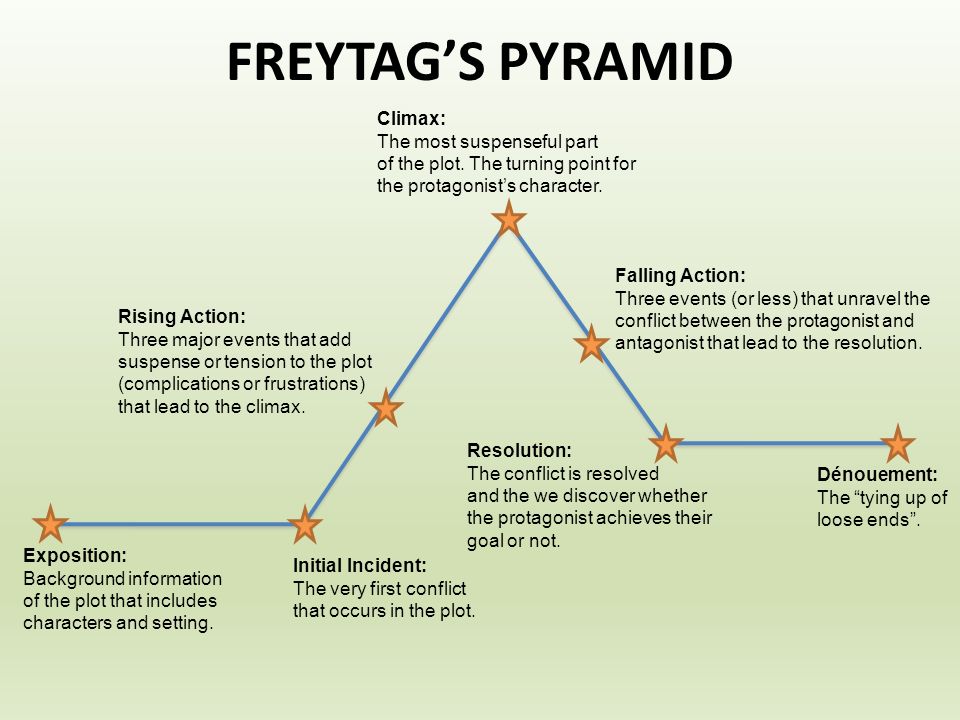
Image result for freytag's pyramid

The emphasis of storytelling is prevalent in all genres of music. However, it is a one of the most defining characteristics of Country and Western music. We can look to our favorite songs to understand our plot structure is comprised. Therefore, to model how this can be done, I will be looking at the iconic country song by The Charlie Daniels Band “The Devil Went Down to Georgia.

Image result for devil went down to georgia

Exposition

The devil went down to Georgia
He was lookin’ for a soul to steal
He was in a bind
‘Cause he was way behind
And he was willin’ to make a deal

When he came upon this young man
Sawin’ on a fiddle and playin’ it hot
And the devil jumped
Up on a hickory stump
And said, “boy, let me tell you what

We are introduced to the characters, the setting, and the conflict immediately. We have the devil and a young boy in the woods fixated around a stump. The conflict arises when the devil issues his challenge.

Rising Action

I guess you didn’t know it
But I’m a fiddle player too
And if you’d care to take a dare, I’ll make a bet with you

Now you play a pretty good fiddle, boy
But give the devil his due
I’ll bet a fiddle of gold
Against your soul
‘Cause I think I’m better than you”

The boy said, “my name’s Johnny
And it might be a sin
But I’ll take your bet
And you’re gonna regret
‘Cause I’m the best there’s ever been”

Johnny, rosin up your bow and play your fiddle hard
‘Cause hell’s broke loose in Georgia, and the devil deals the cards
And if you win, you get this shiny fiddle made of gold
But if you lose, the devil gets your soul

The devil opened up his case


And he said, “I’ll start this show”
And fire flew from his fingertips
As he rosined up his bow

Then he pulled the bow across the strings
And it made an evil hiss
And a band of demons joined in
And it sounded something like this

When the devil finished
Johnny said, “well, you’re pretty good, old son
But sit down in that chair right there
And let me show you how it’s done”

In this section of the song, we build up the conflict. Johnny has accepted the challenge and he is aware of the consequences. We see and hear the devil’s performance, and are left wondering can Johnny win this fight?

Climax

He played Fire on the Mountain run boys, run
The devil’s in the House of the Rising Sun
Chicken in a bread pan pickin’ out dough
Granny, does your dog bite? No child, no

The climax of the song is mostly instrumental, characterized by violin solo offered by our protagonist Johnny. We see our hero’s turning point and his offer of resolve to the conflict. The challenge was accepted, the battle was fought, and our protagonist was victorious.

Falling Action

The devil bowed his head
Because he knew that he’d been beat
And he laid that golden fiddle
On the ground at Johnny’s feet

Johnny said, “Devil, just come on back
If you ever want to try again
I done told you once you son of a b***h
I’m the best that’s ever been”

We see the conflict resolved. We see our hero triumphant and wallowing in the spoils of his war. It is confirmed that our protagonist has established himself as the victor.

Resolution

He played Fire on the Mountain run boys, run
The devil’s in the House of the Rising Sun
Chicken in a bread pan pickin’ out dough
Granny, does your dog bite? No child, no

Our resolution is given in a repeat of the chorus, with the song trailing out as Johnny repeats his violin skills. This confirms to the reader that the conflict was resolved completely and not by accident. All loose ends are tied, and thus the book and story is closed.
Exploring Literary Movements Using Music

Exploring Literary Movements Using Music

There are many movements that we use to label and categorize major styles and themes prevalent in literature. These movements, overarchingly, were thought movements or philosophical movements. These were shaped by the mindsets of the society and the major ideals in discussion. Obviously, we can analyze these movements and seek to understand them by looking at the works of literature of the period. However, literature was not the only artistic medium. We can also look to music to help understand and define these movements.

We will be looking at four of these movements: Romanticism, Transcendentalism, Modernism, and Post Modernism.

Romanticism

Romanticism was a literary and artistic movement prevalent in Europe in the first half of the 1800s. Romanticism is characterized by expressionist writings that focused on emotion and feeling. Many works in this period focused on themes such as individual expression and glorification of the past and the natural world. Encyclopedia Britannica notes, “Romanticism emphasized the individual, the subjective, the irrational, the imaginative, the personal, the spontaneous, the emotional, the visionary, and the transcendental.” The movement focused much on cognivist and expressionist thinking. Knowledge in these texts was a very human thing and glorified by vivid imagery discussing emotion and human nature.

To further understand Romanticism, we can turn to the music that the movement bore. The music at the time often revolted against classical conventions and thus breaking free from limitations in order to express emotion and feeling in all ways possible.

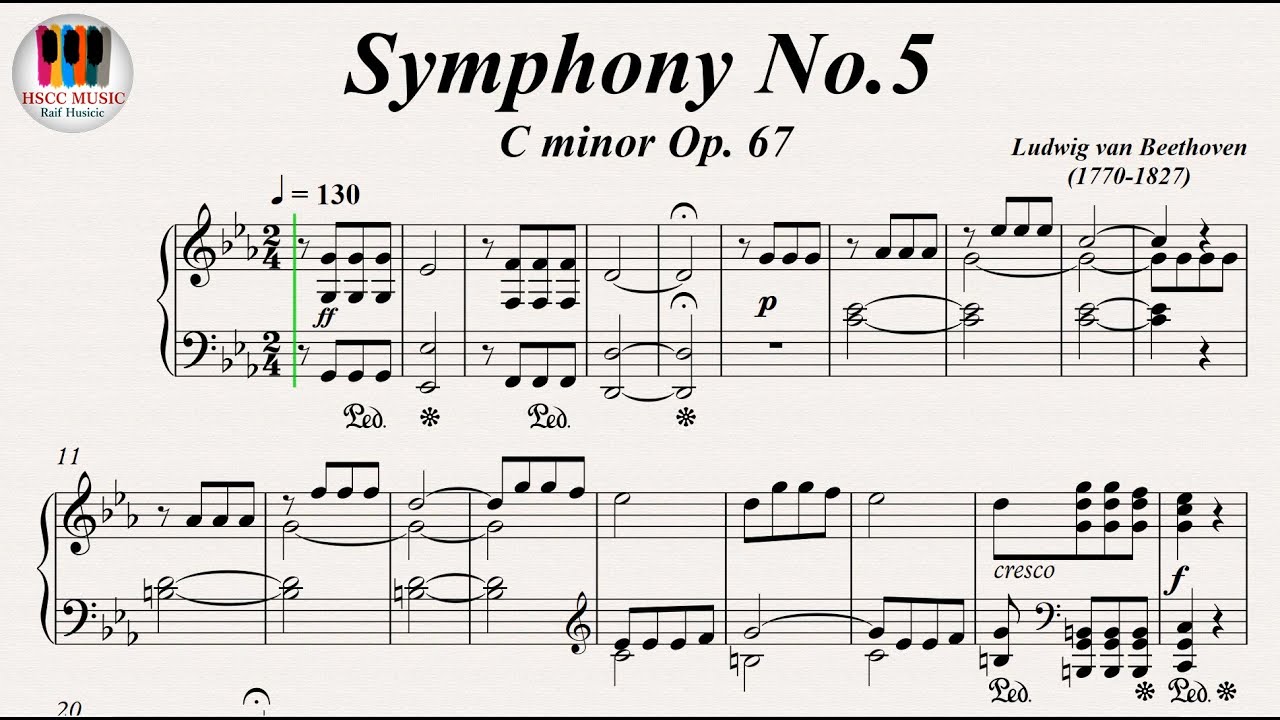
Image result for beethoven symphony 5

The most well-known composer of the era was Beethoven. By looking at his Fifth Symphony, we can see traits relevant to the era. The composition utilized non-conventional tonalities and structure to create suspense and triumph. By breaking free from convention, and seeking to make sound that was completely human, Beethoven composed one of the most iconic pieces of music of all time.

Transcendentalism

Transcendentalism was a literary and artistic movement that bred itself from the European Romanticism that was prevalent at the same time in the early 1800s. The philosophies surrounding this movement were concerned with knowledge and where it resides.   UShistory.org writes, “This knowledge comes through intuition and imagination not through logic or the senses. People can trust themselves to be their own authority on what is right.” This movement was highly influenced by the philosophies prevalent at the time. Works of David Hume and Immanuel Kant were influencing various artistic mediums including literature. Transcendentalism was an inherently optimistic movement focusing on the goodness and positivity of human nature in relation to the world we live in.

Image result for dont stop believing

We can even see transcendental influences in more modern music. An example of this is Journey’s iconic song, “Don’t Stop Believin’”. The song promotes something greater and staying strong to one’s beliefs and values. We can learn the most about ourselves from ourselves innately.

Modernism

Modernism was a thought movement that became prevalent in the late 19th and early 20th centuries. Growing in population with the rise of modern industry and capitalism, modernism is characterized by a self-consciousness that, combined with logic and objectivity, promotes skeptics of the world around us. The Literature Network notes, “In contrast to the Romantic world view, the Modernist cares rather little for Nature, Being, or the overarching structures of history. Instead of progress and growth, the Modernist intelligentsia sees decay and a growing alienation of the individual.” Although mostly often spoke about as a means for literary criticism, Modernism was an overarching philosophy that was prevalent in all forms of art and expression.

Image result for prog rock

The genre of Progressive Rock is a good example of modernism at work in music. Music that is written that breaks conventions but follows a contrasting convention of breaking convention. Early Progressive Rock bands include, Rush, Yes, King Crimson, and the Moody Blues.

Post Modernism

Postmodernism bred itself as a thought movement in direct contrast with modernism. Postmodernist agree that reality is not defined by a singular human understanding, however it is defined by an individual’s struggle to make sense of that reality. PBS writes, “Postmodernism is largely a reaction to the assumed certainty of scientific, or objective, efforts to explain reality.” There is multiplicity in meaning. Subjective truth triumphs over notions of objective truth. Most importantly, Postmodernism denies the purposes of metanarratives, or single answers to undefinable and wide breaching notions.

Image result for picture kid rock & sheryl crow album cover

One example of Postmodernism in music is the use of multiple perspectives that explain one situation. Emphasizing the fact that there is always multiplicity in meaning, there are always multiple sides to the same story. The iconic song “Picture” by Sheryl Crow and Kid Rock showcases this. It offers two sides of a breakup. It offers two interpretations of the same picture.

References and Further Reading

https://www.britannica.com/art/Romanticism

https://www.theartstory.org/movement-romanticism.htm

http://www.ushistory.org/us/26f.asp

http://www.newworldencyclopedia.org/entry/Modernism

http://www.online-literature.com/periods/modernism.php

https://www.pbs.org/faithandreason/gengloss/postm-body.html